
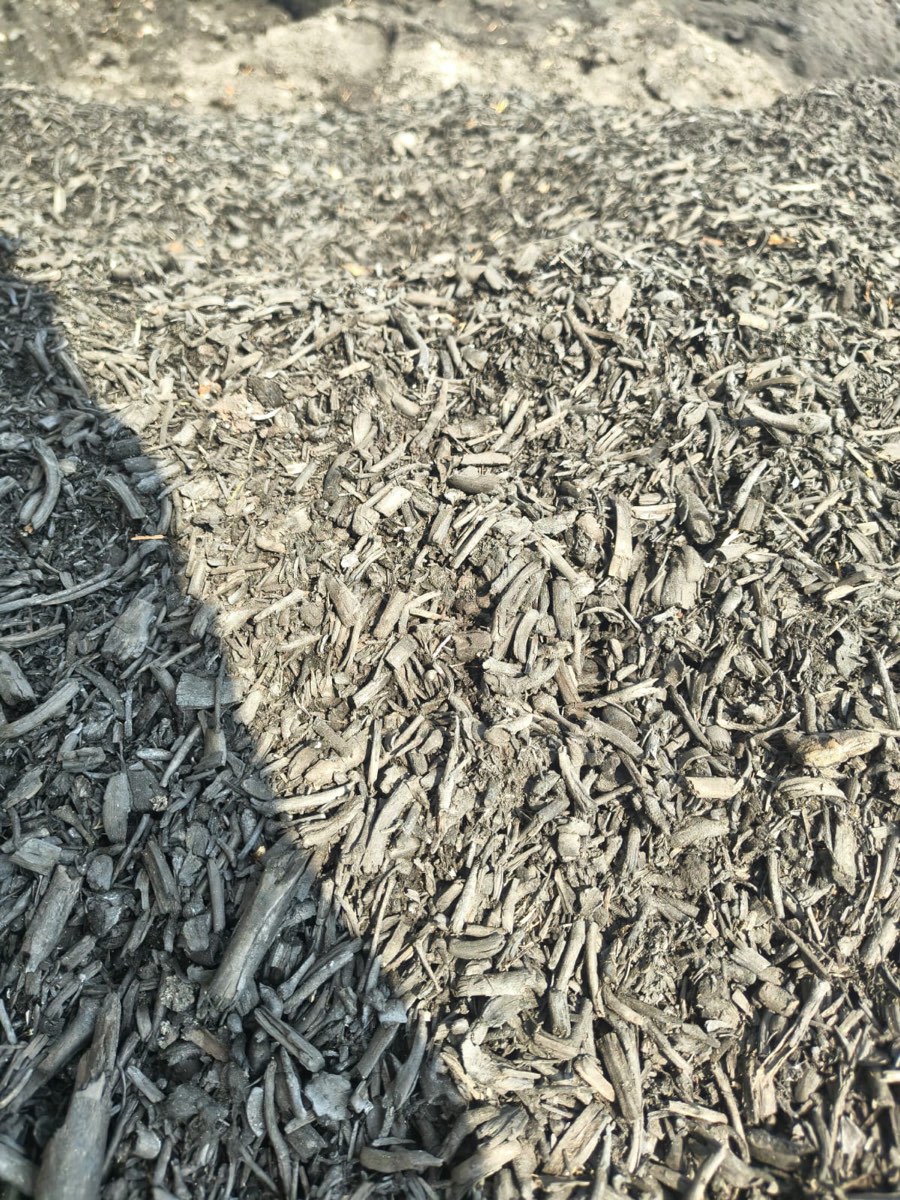
Cotton stalk
The woody stem left standing after the cotton harvest. Farmers usually burn it to clear the field for the next crop, which adds to the smoke over north India every winter. We collect it from farmers and pay them for it.
DetoXyFi Biochar LLP
After the cotton harvest, the woody stalks left standing are usually burned or ploughed in. We buy them from farmers, along with invasive kikar cleared from dry land, and turn both into biochar at our plant in Rajasthan. The carbon stays locked in a stable form instead of going up in smoke.
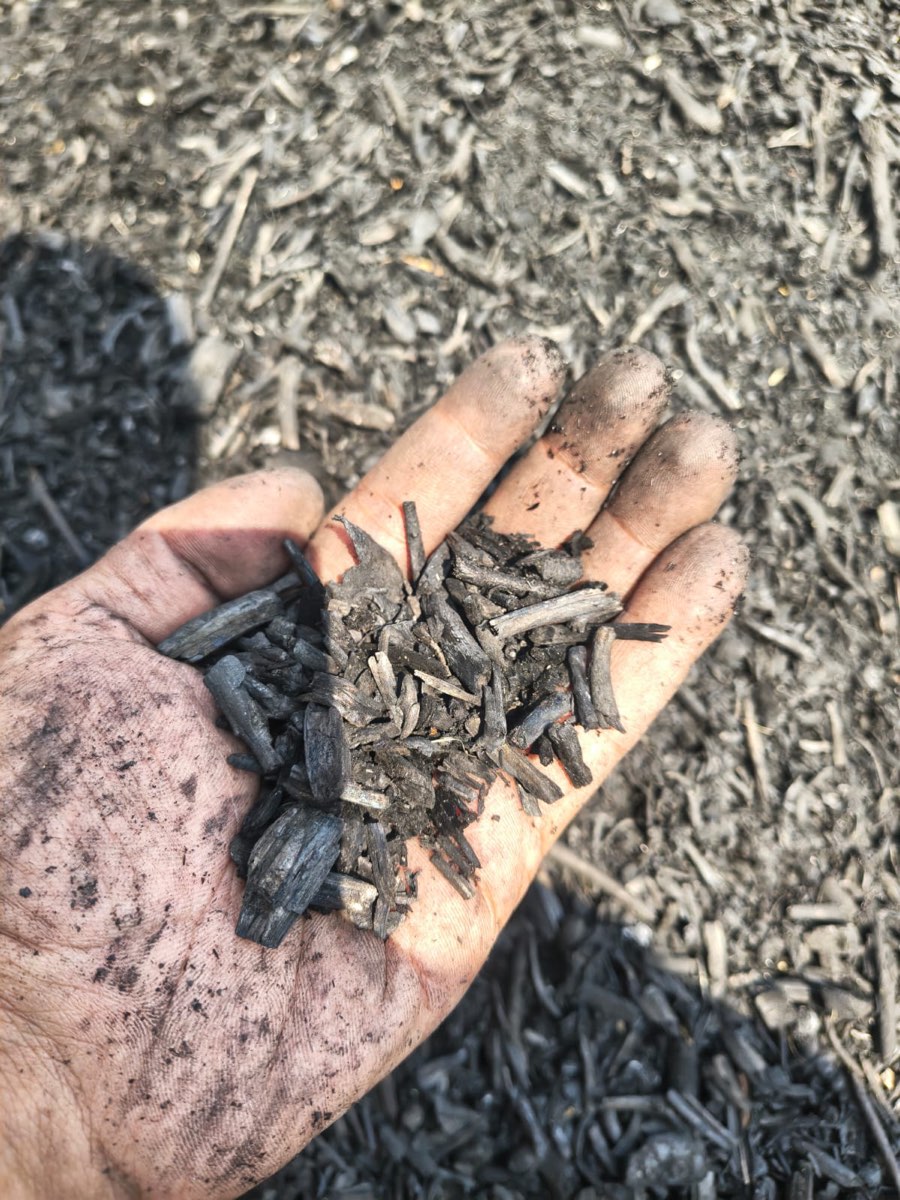
Our plant is designed for about 4,000 tonnes of biochar a year, and we plan to grow to about 14,000 tonnes a year in 2027. The first batches have been made and tested, and the reactors are being commissioned for regular production from December 2026.
What goes in
The woody stem left standing after the cotton harvest. Farmers usually burn it to clear the field for the next crop, which adds to the smoke over north India every winter. We collect it from farmers and pay them for it.
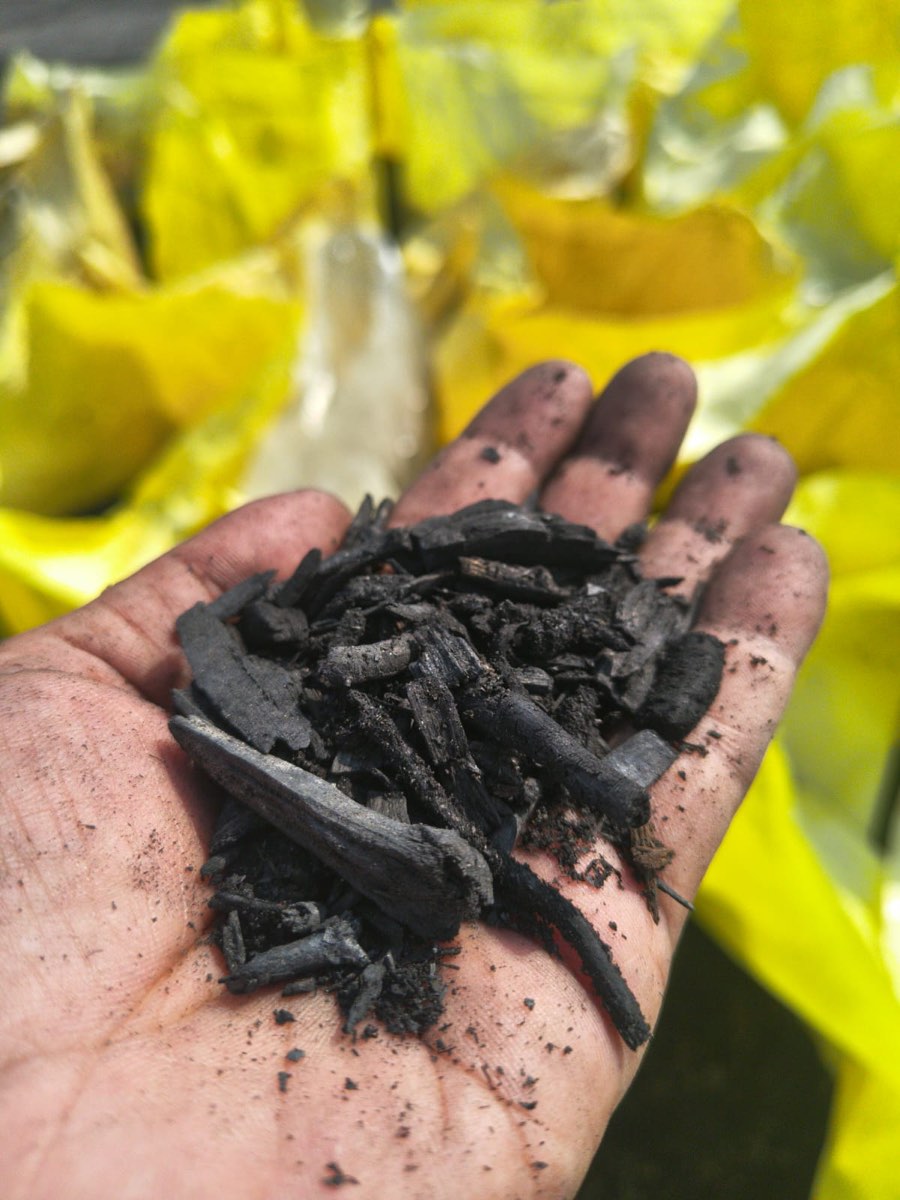
An invasive shrub that spreads over dry and degraded land in western India and crowds out grazing and native plants. Clearing it frees the land for other use, and its dense wood makes a high-carbon biochar.
How it's made
Biochar is made by heating biomass with very little oxygen, so it chars instead of burning. We use continuous industrial pyrolysis reactors running at 450 to 650 °C. That gives a far more consistent product than kiln charcoal, batch after batch, and it is what buyers who need a steady specification ask for.
Cotton stalk bought from farmers near the plant, and kikar cleared from dry land.
The residue is readied for the reactor at the plant.
Continuous reactors heat it to 450–650 °C with little oxygen.
Samples go to the lab, and the biochar is bagged for buyers and trials.
Where it goes
Biochar is mostly stable carbon with a lot of internal surface. Depending on how it is sized and treated, that makes it useful in very different places. Here is where ours is going, and how far along each one is.
Mixed into farm soil, biochar holds water and nutrients near the roots and stores carbon for the long term. We are setting up trials with farms and growers.
A renewable carbon source that can replace part of the coal or coke as a reductant or recarburiser. Its low sulphur helps. We are sending samples to steel makers for plant trials.
Kikar biochar burns hot (about 6,700 kcal/kg, dry) and can stand in for coal in boilers and furnaces.
We are testing steam and acid activation of our cotton-stalk char for water and wastewater treatment. Results will follow.
We are studying biochar as a mineral filler in bituminous road mixes, which would lock carbon into the road itself.
Biochar applied to soil keeps its carbon out of the air for a very long time. See below for where our carbon removal project stands.
Lab results
Eurofins tested three samples each of our cotton-stalk and kikar biochar in October 2026 (lab jobs D261013008 and D261013006). These are the averages.
| Parameter | Cotton stalk | Kikar (P. juliflora) |
|---|---|---|
| Total carbon, % dry | 61.9 | 76.7 |
| Ash, % dry | 4.8 | 9.5 |
| Volatile matter, % dry | 21.7 | 20.4 |
| Sulphur, % dry | 0.14 | 0.17 |
| Phosphorus, % dry | 0.08 | 0.08 |
| Gross calorific value, kcal/kg dry | 5,371 | 6,736 |
| Moisture, % as received | 31.6 | 24.0 |
| Bulk density, kg/m³ | 671 | 787 |
| Particle size | 1.18–10 mm, with more fines | Mostly 1.18–10 mm, few fines |
Still to come: H/Corg ratio, BET surface area, PAHs and heavy metals, which certification and some buyers need. Those tests are under way and we will add them here. Buyers can ask us for the full lab sheet.
Carbon removal
Our carbon removal project is called Biochar Nexus. Cotton stalk that would have been burned is turned into biochar and applied to farm soil, where its carbon stays stored for the long term.
We are taking the project through registration with Puro.earth, a carbon removal registry. As part of that, we held a public stakeholder consultation with farmers and local residents near the plant on 14 October 2026.
Carbon removal credits only mean something once an independent verifier has checked them. Until our project is registered and verified, we won't describe any removal as certified. When that changes, the registry listing will be linked here.
For buyers planning ahead, we are happy to talk about future supply. Write to us.
Team
A small team of scientists and engineers, most with doctorates from IIT Kanpur, part of DetoXyFi, the company behind the Jal Kavach water filter.

Founder and CEO
Runs the company. IIT Delhi, Harvard and Wharton.
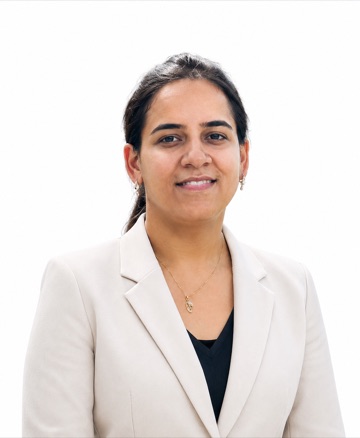
Bio-Carbon Scientist
PhD, IIT Kanpur. Leads biochar quality, lab testing and work with buyers' technical teams.

Research Scientist
PhD, IIT Kanpur, then postdoctoral research at Ohio State. Works on the Biochar Nexus project and our activation research.

R&D Scientist
PhD, IIT Kanpur. Looks after the plant set-up, lab instruments and specialised tests for steel.

R&D Engineer
B.Tech, IIT Jammu. Engineering and equipment.

Adviser
Tata Professor of Mechanical Engineering at MIT, and co-founder of DetoXyFi.
Work with us
We need a technical officer to keep the plant's records and a lab technician to run quality tests, both based at our plant in Rajasthan. If you studied science or engineering and want to work on something real in Rajasthan, write to hellobiochar@detoxyfi.com.
Get in touch
Tell us what you would use the biochar for and roughly how much. We reply to every message, usually within two working days.
DetoXyFi Biochar LLP, Jaipur, Rajasthan.